
Last updated November 23, 2026
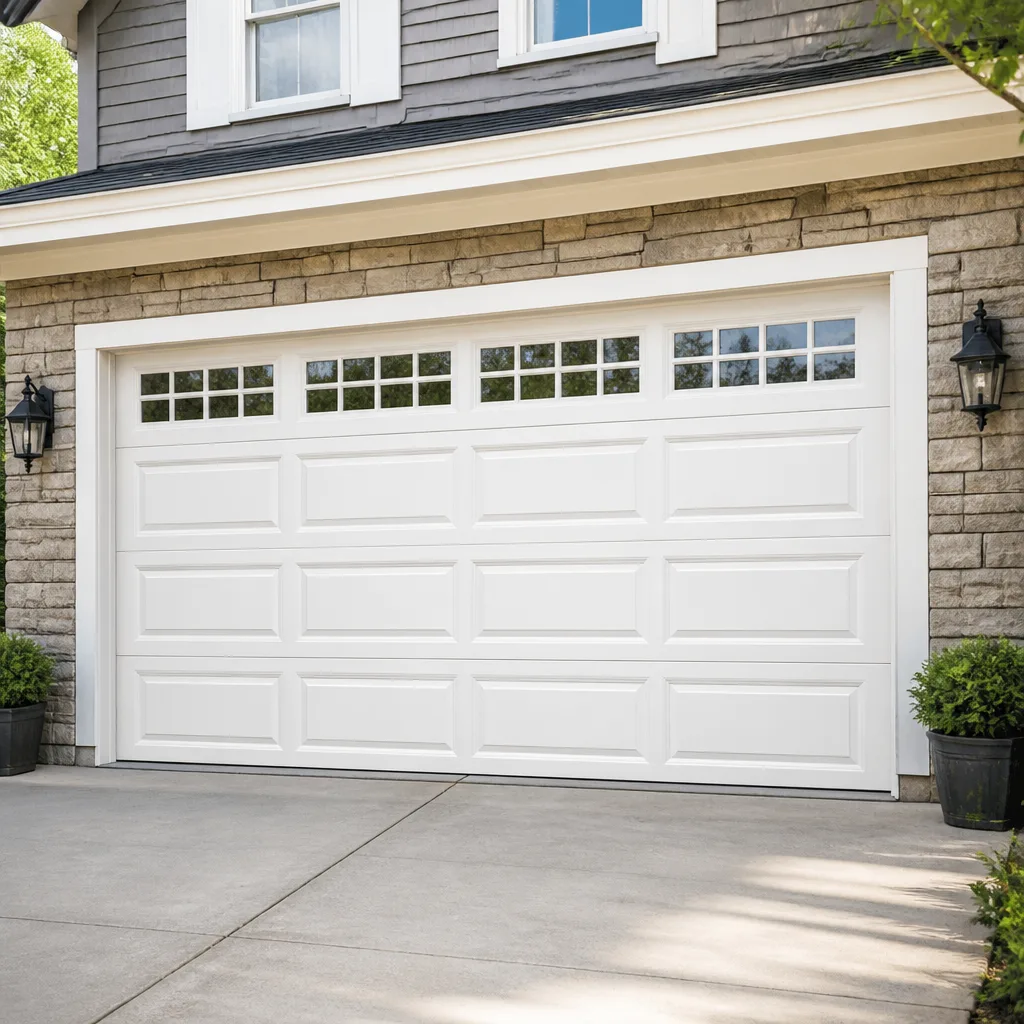 Raised-panel steel
 Carriage house
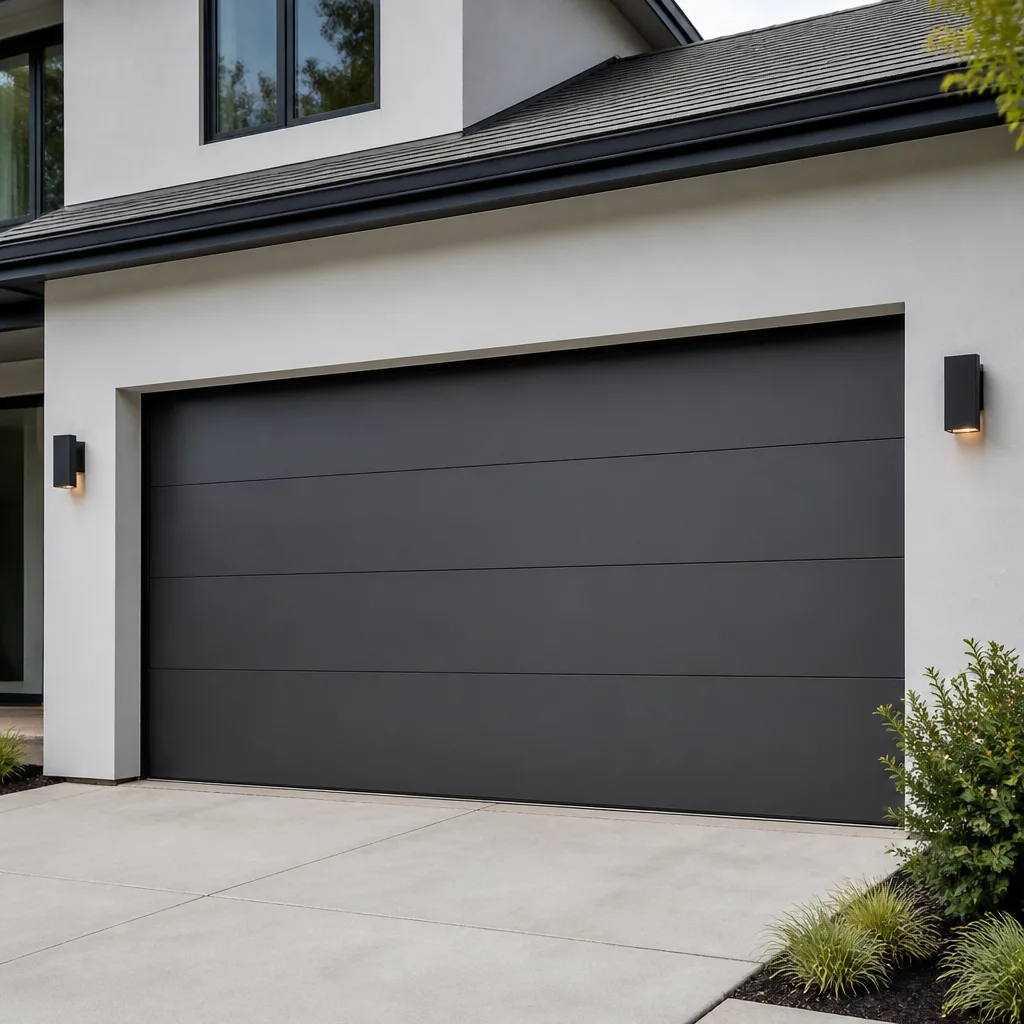 Modern flush
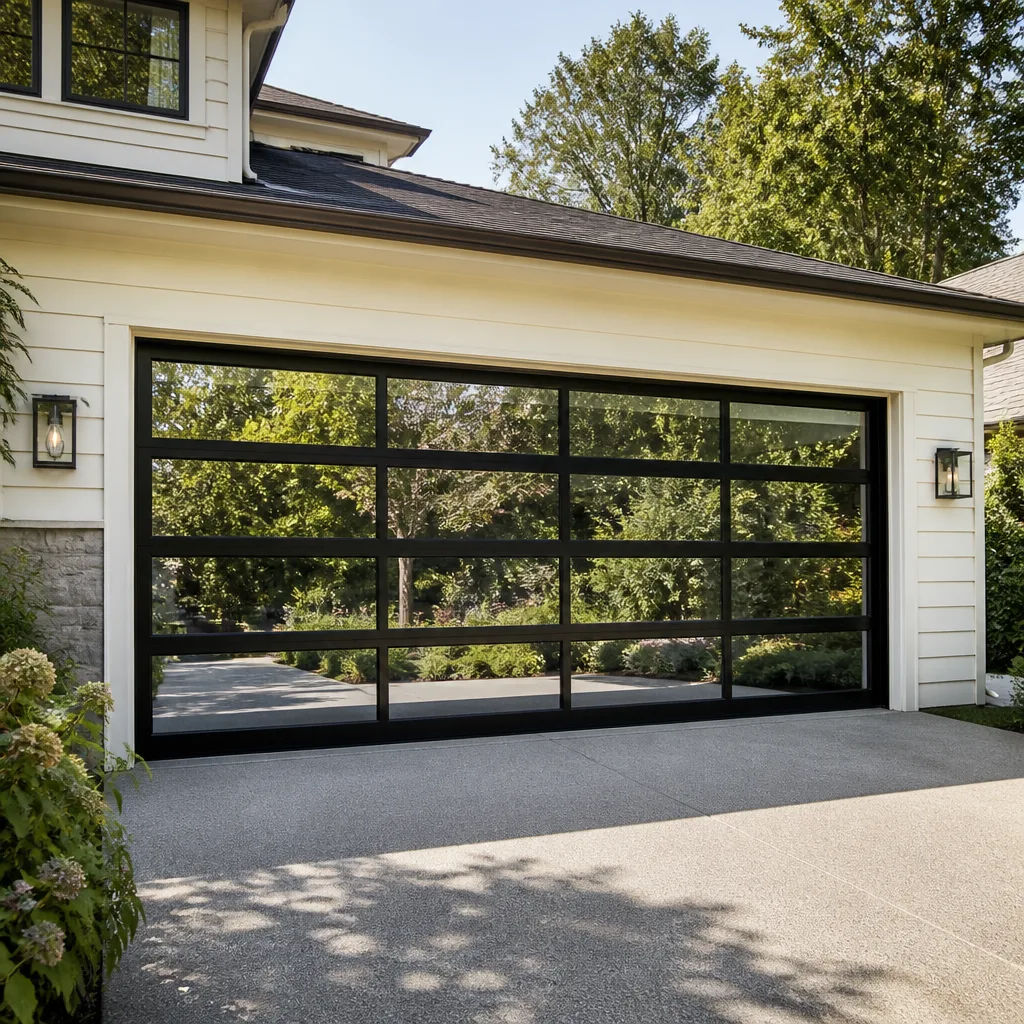 Full-view glass
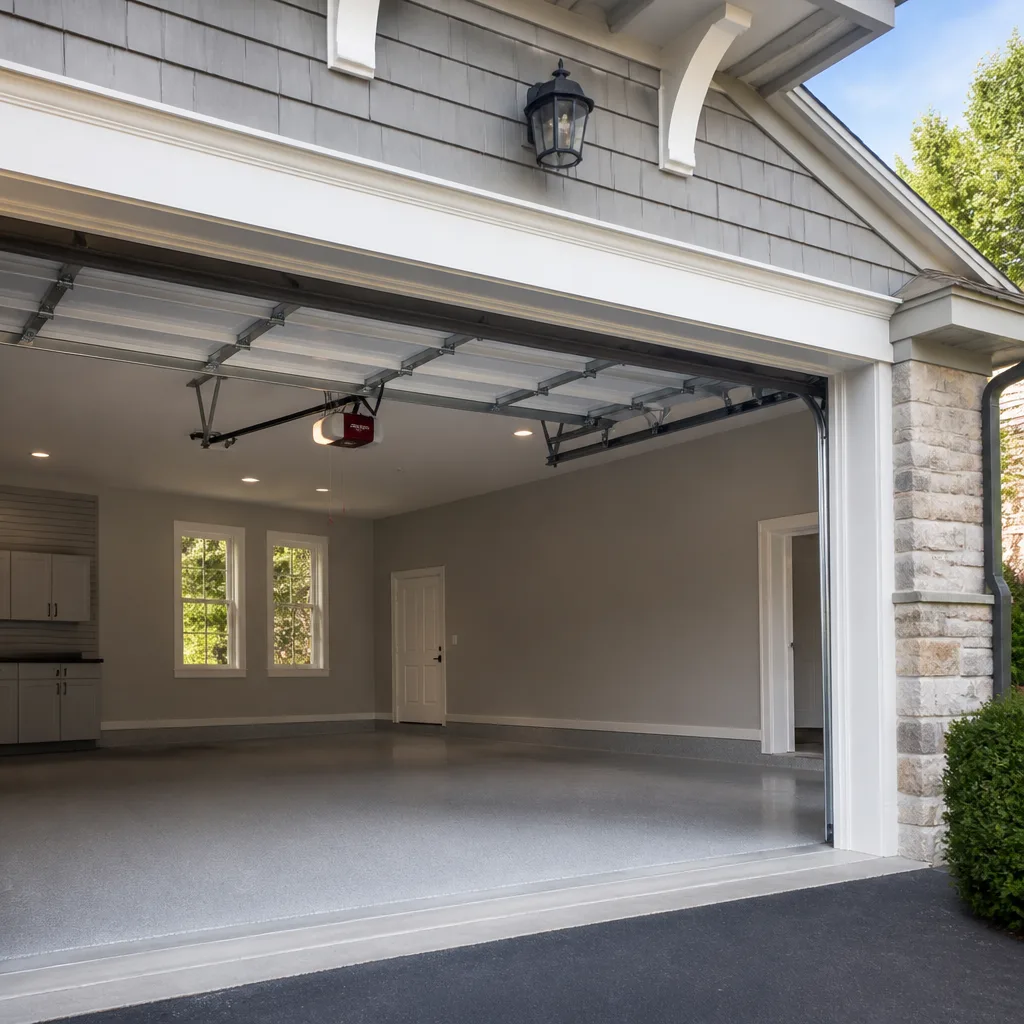 LiftMaster openers
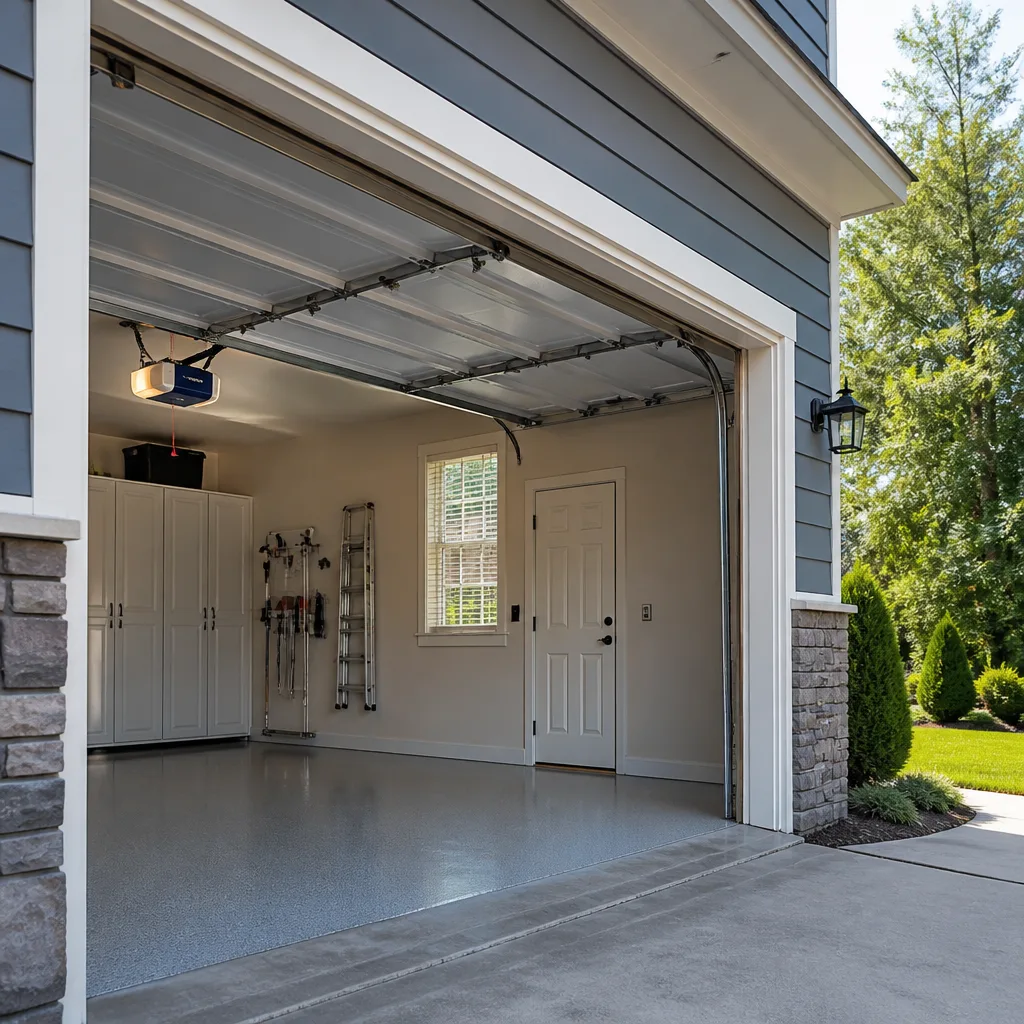 Chamberlain openers
Full 25-point door and opener safety check with every visit - springs, cables, rollers, tracks, and your LiftMaster or Chamberlain opener included
You get a price before we start. It does not change when the pro arrives.
Get your free estimateGarage Door Repair Maintenance Checklist for Bensalem Homeowners
A snapped spring in January doesn’t happen randomly. There’s a chain of skipped maintenance steps that leads to it, and each one is detectable weeks in advance. Most checklists tell you to “lubricate moving parts” and call it done. That advice is too vague to help, because it doesn’t tell you which part fails first, what the early warning looks like, or when a minor squeak has turned into a red line you shouldn’t touch. Garage doors fail in a predictable order: rollers and hinges get noisy first, cables stretch, the door loses balance, and only then does the spring take the strain it was never meant to carry. In this guide, we’ll walk that sequence in order and give you the monthly, quarterly and annual tasks that fit Bensalem’s four very different seasons. You’ll finish knowing exactly what to check, what the numbers from a balance test actually tell you, and when to stop and call a specialist.
Quick Answer
A proper garage door maintenance checklist covers four things: monthly lubrication of moving metal parts, quarterly checks of the safety reverse and balance, annual inspection of springs, cables and hardware, and seasonal adjustment for the temperature swings that Bensalem sees between summer and winter. The goal isn’t to fix everything yourself. It’s to catch the failure sequence early – starting with the rollers and hinges, then the balance, then the springs – so a small $20 problem doesn’t become a broken spring or a fallen door that needs professional help. Our technicians have up to 8 years of experience on exactly these systems, and the checklist below reflects the order failures actually happen in this climate.
Styles & brands we work with
- Raised-panel steel
- Carriage house
- Modern flush
- Full-view glass
- LiftMaster openers
- Chamberlain openers
Table of Contents
- Why the Order of Failures Matters More Than the Task List
- Monthly Tasks: What to Check Every 30 Days
- Quarterly Tasks: Balance Testing and Safety Reverse
- Annual Tasks: Springs, Cables and Hardware
- Seasonal Timing for Bensalem’s Climate
- The Right Lubricant for the Right Component
- Red Lines: Stop and Call a Specialist
- Common Mistakes to Avoid
Why the Order of Failures Matters More Than the Task List
A garage door is a system of parts that share load. When one weakens, the ones around it take more strain. That’s why failure follows a sequence, and why a checklist that treats every part as equally urgent will never warn you in time. Trailers, hinges and rollers degrade first. They’re the parts that move the most, and they tell you what’s coming. A roller that seizes doesn’t just squeak – it drags against the track, transfers stress to the hinge, and makes the door harder to lift. The opener works harder to compensate. The spring has to carry more than it was designed to carry. By the time the spring snaps, the actual cause was set in motion months earlier.
This is the framework that separates a real checklist from a generic one. You’re not checking parts because they’re on a list. You’re checking parts in the order they’ll fail, so you catch the signal while it’s still cheap to fix. In our experience across Bensalem, the homes that schedule maintenance rarely call us for emergencies – not because their doors are special, but because they catch the early signs before they cascade.
- Stage 1 (first to fail): rollers, hinges and bearings – noisy, stiff, or grinding
- Stage 2: cables stretch, tracks go out of alignment, the door loses smooth travel
- Stage 3: balance fails – the opener lifts what the spring should be lifting
- Stage 4: the spring overworks and either weakens or breaks
Your job as a homeowner is to catch stages 1 and 2. Stage 3 is a warning that a specialist should look at. Stage 4 is a job for a professional, full stop – we’ll explain why further down.
Monthly Tasks: What to Check Every 30 Days
These monthly tasks take 10 minutes and prevent the majority of surprise failures.
- Listen to the door. Open and close it once, and stand inside the garage rather than outside. Squeaks point to hinges or rollers. A rattle points to loose hardware. A grinding noise points to a bearing or a roller that’s ceased to roll.
- Watch the travel. The door should move smoothly, with no jerking or hesitation. A door that starts and stops is fighting something – usually a stiff roller or a misaligned track.
- Check the weather seal along the bottom. A cracked or torn seal lets cold air and water into the garage, and it also changes how the door rests against the floor. Run your hand along it. If it’s stiff, cracked, or pulling away, it needs replacing.
- Look at the hinges. Loose screws are common and easy to spot. Tighten them, but don’t overtighten into a stripped hole – if a hinge won’t hold a screw securely, that’s a sign the hinge itself is worn.
- Inspect the rollers (without disassembling anything). Nylon rollers should look smooth and dry. Steel rollers should turn freely. Any roller with visible flat spots, cracks, or a wobble in the track is failing.
For Bensalem homeowners, this monthly routine is especially worth doing right after a stretch of very cold nights. Cold stiffens lubricant and shrinks seals – both of which change how the door behaves. If you hear something different in January that wasn’t there in October, this is why.
Quarterly Tasks: Balance Testing and Safety Reverse
Every three months, test the door’s balance and the opener’s safety features. These two checks tell you whether the springs are doing their job and whether the opener is protecting anyone underneath the door.
The balance test
This one is simple and safe to do yourself. Disconnect the opener with the manual release – usually a pull cord on the rail, near the door. Then lift the door by hand to about waist height, slowly, and let go.
- Door stays up: springs are balanced and doing their job.
- Door drifts down slowly: still within a normal range – monitor it at the next quarterly check.
- Door drops quickly or slams shut: springs are under-tensioned or failing. Stop using the automatic opener and call a specialist.
- Door rises on its own: springs are over-tensioned. Also a call to a specialist.
This is where the numbers matter. A door that stays up is healthy. A door that drops in a slow drift is your early warning – the spring has lost tension but hasn’t broken. It might run like that for a few weeks. It might not. Don’t test the balance repeatedly if it’s dropping – each cycle puts more stress on the spring. Test it once, note the behavior, and schedule a professional inspection if it’s dropping or rising.
Safety reverse test
The opener has two safety systems. The first is an obstruction sensor near the floor, usually two small units with an invisible beam between them. Wave something through the beam while the door is closing – the door should immediately reverse. The second is a mechanical reverse: lay a 2×4 flat on the ground under the door, close the door, and it should reverse on contact. If either fails, the opener needs adjustment before the door is used again.
Annual Tasks: Springs, Cables and Hardware
The annual check is where you inspect the parts that shouldn’t be touched without the right equipment – springs, cables, and the metal framing that holds the door to the building. You’re not testing these yourself. You’re looking for signs that a specialist should. If you need help identifying what’s safe to handle, our garage door spring repair page explains the difference between a spring you can visually inspect and one that’s dangerous to touch.
- Springs: look for visible gaps or separation in the coil. A spring with a clear gap is broken or breaking. Any visible rust on a spring is a warning sign in this climate, since winter moisture and road grime speed up corrosion. Do not attempt to adjust the tension yourself – we’ll cover why below.
- Cables: the cables run from the bottom corners of the door up to the spring anchor at the top. Look for fraying, kinks, or slack. A frayed cable can snap without warning, and a loose cable is a serious hazard. If you see either, stop using the door.
- Drums and bearings: the drums at the end of the torsion bar should be rust-free and seated properly. Bearings should turn without grinding.
- Anchor plate: the heavy metal bracket that holds the torsion system to the wall. It should be secure and free of cracks.
- Track alignment: the two vertical and two horizontal tracks should be parallel and clean. Use a level if you have one – a bent track means the door is being guided wrong.
If anything in this annual list looks off, that’s your cue. Spring, cable and anchor issues aren’t user-serviceable. They need a trained technician, and the risk of trying otherwise is real. For everything else, garage door repair covers the range of small fixes that keep a door working between annual checks.
Seasonal Timing for Bensalem’s Climate
Bensalem sits between the coastal plain and the inland hills of Bucks County, and the swing between a humid summer and a freezing winter is what stresses garage doors most. The metal expands in July and contracts in January far more than it does in a mild climate. That’s not a reason for alarm – it’s a reason to time your checks around the seasons.
- Late fall (before the first hard freeze): this is your most important maintenance window in Bensalem. Replace worn seals before they shrink and crack. Apply lubricant while the weather is still mild, so hinges and rollers aren’t stiff going into winter. Check the balance test now, so a weak spring is caught before the door has to work against freezing temperatures.
- Mid-winter: listen to the door every time you use it. Cold-stiffened lubricant and shrunken seals make this the season where early problems become loud problems. If the door is noticeably sluggish, don’t force it – the opener will keep pushing until something gives.
- Spring: after the freeze-thaw cycle, check for rust on springs and any weather-seal damage. Repeat the balance test.
- Summer: heat softens lubricant and expands the door. Check for tracks that have shifted slightly and rollers that have dried out. The quarterly safety reverse test applies year-round.
If you want a single schedule: lubricate and inspect in the fall, re-test the balance in spring, and listen to the door every month. Everything else can be quarterly. If you’re noticing the same issue year after year, our Garage Door Repair Bensalem service can identify what’s causing it rather than waiting for it to fail.
The Right Lubricant for the Right Component
“Oil the hinges” is the advice that keeps a lot of doors noisy. Different parts need different lubricants, and using the wrong one creates new problems. Here’s the breakdown:
- Silicone spray: the safe default for anything that moves and contacts plastic or rubber. Use it on the weather seal track edges, on the nylon rollers, and on the opener rail in cold weather, where it stays flexible. Silicone doesn’t attract dust the way heavier products do.
- Lithium grease (white lithium): use it on the metal hinges, the pivot points of the door arms, and the torsion bearings. It’s the right choice for metal-to-metal surfaces under load. Apply with a small brush or a spray can with a straw, and wipe away any excess.
- Do not use: WD-40 as a lubricant (it’s a light solvent – it cleans, but doesn’t stay), household oil (attracts dirt and thins out fast), or grease on the springs. Springs should be checked, not lubricated. Lubricated springs hold grime and hide cracks, which defeats the point of inspecting them.
Timing matters too. Apply lubrication in mild weather, not the middle of a cold snap. Lithium grease stiffens in the cold, so a hinge you grease in December will be noisy by January. In Bensalem, the ideal window is late October or early November – cool enough that the grease sets, mild enough that it flows into the hinge and coats the bearing. And it’s worth taking a close look at your door’s hardware first: if it’s a LiftMaster or Chamberlain system, the opener manual will tell you what the manufacturer recommends. If it’s a Raynor or Craftsman, the same idea applies – check the door manufacturer’s guide before you buy lubricant.
Red Lines: Stop and Call a Specialist
Most checklist items reward you for waiting and monitoring. A few don’t. These are the indicators that mean stop immediately, don’t use the door, and call a trained professional. Some of these parts carry stored energy that can release without warning – a garage door spring under tension is one of the most dangerous components in a typical home, and people are hurt every year trying to adjust one.
- A visible gap or break in the spring coil: the spring has failed. Do not open the door, and call a specialist. garage door opener repair can’t help here – a failed spring is a mechanical repair, and the opener will just burn itself out trying to lift the door.
- A frayed, kinked or slack cable: cable failure can cause the door to fall. Stop using the door.
- The door falls fast when tested for balance: spring or cable issue – don’t keep testing it.
- Grinding or scraping that’s getting louder: a failing bearing or roller, or a door that’s come off track. Stop before it bends the track.
- The door tilts or hangs lower on one side: a broken spring, a broken cable, or a snapped hinge. All of these are specialist jobs.
- The opener strains to lift the door: this usually means the door has lost balance, not that the opener is weak. Forcing it just wears out the opener.
- Any smell of burning from the opener or a breaker that trips: stop using the opener and have it checked.
If you’re not sure which category a problem falls into, err on the side of caution. A quick visual inspection by a technician costs far less than a bent door or a spring that releases unexpectedly. Our garage door opener repair specialists can check both the opener and the door in one visit.
Common Mistakes to Avoid
- Lubricating the springs. Springs should be dry and clean so cracks and gaps are visible. Grease hides the warning signs and holds dust. Inspect springs with your eyes, not a grease gun, and never adjust the tension yourself.
- Using WD-40 as a lubricant. It cleans and temporarily quiets a hinge, but it evaporates and leaves the part drier than before. Use silicone or white lithium, matched to the component.
- Skipping the balance test in winter. In Bensalem, this is the season when a weakening spring is most likely to fail completely. A door that’s dropping on the balance test in November might not last to March if it’s ignored.
- Over-tightening hinge screws. Tightening a loose screw into a worn hole strips it further. If the screw won’t hold, replace the hinge rather than forcing it.
- Testing the safety reverse with your body. Never stand under a closing door to test the reverse mechanism – use the sensor beam or a flat 2×4, both of which are safe tests that produce the same result.
- Ignoring a single stiff roller. One bad roller is cheap to replace. Left alone, it transfers stress to the hinge and track, which are more expensive to fix. The failure sequence works against you if you ignore stage 1.
- Fixing the opener when the problem is the door. If the door is heavy or unbalanced, the opener isn’t the problem – it’s the victim. Repairing it without fixing the balance just means it fails again.
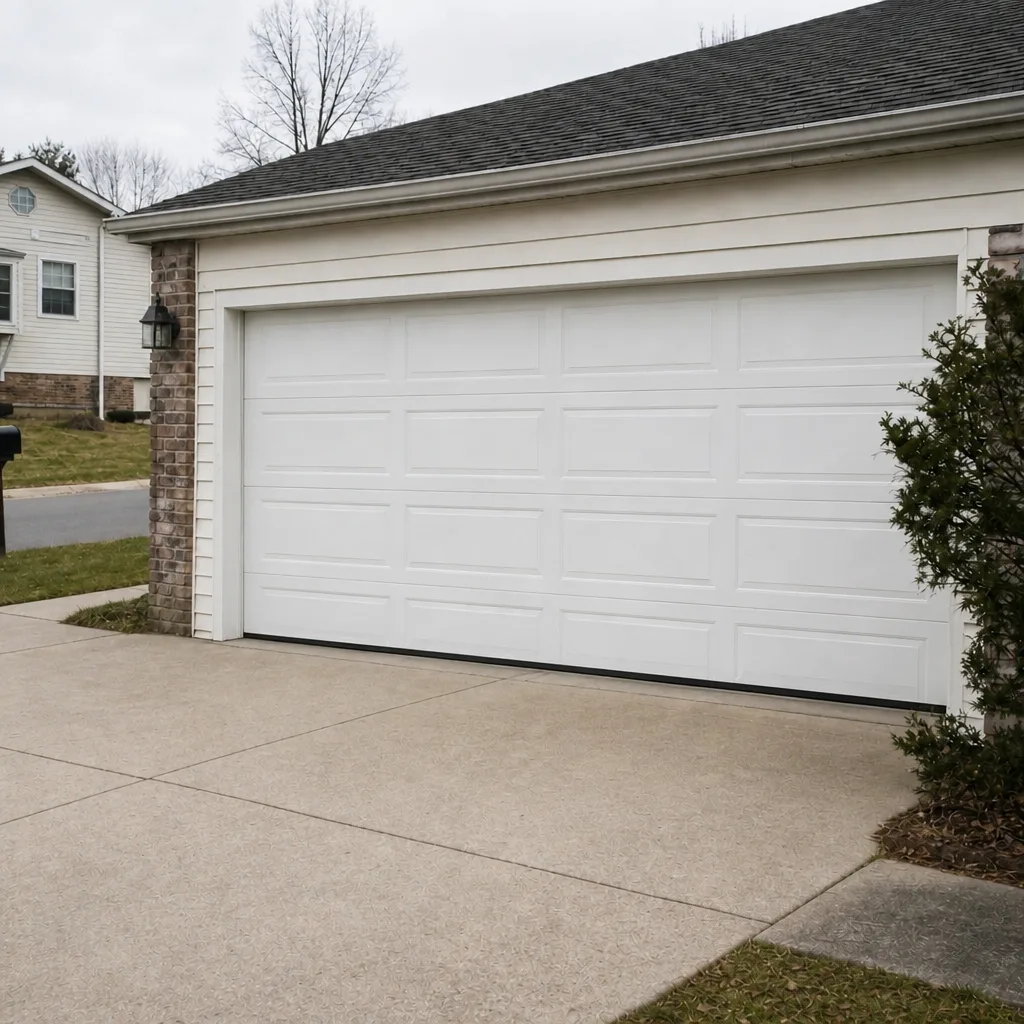
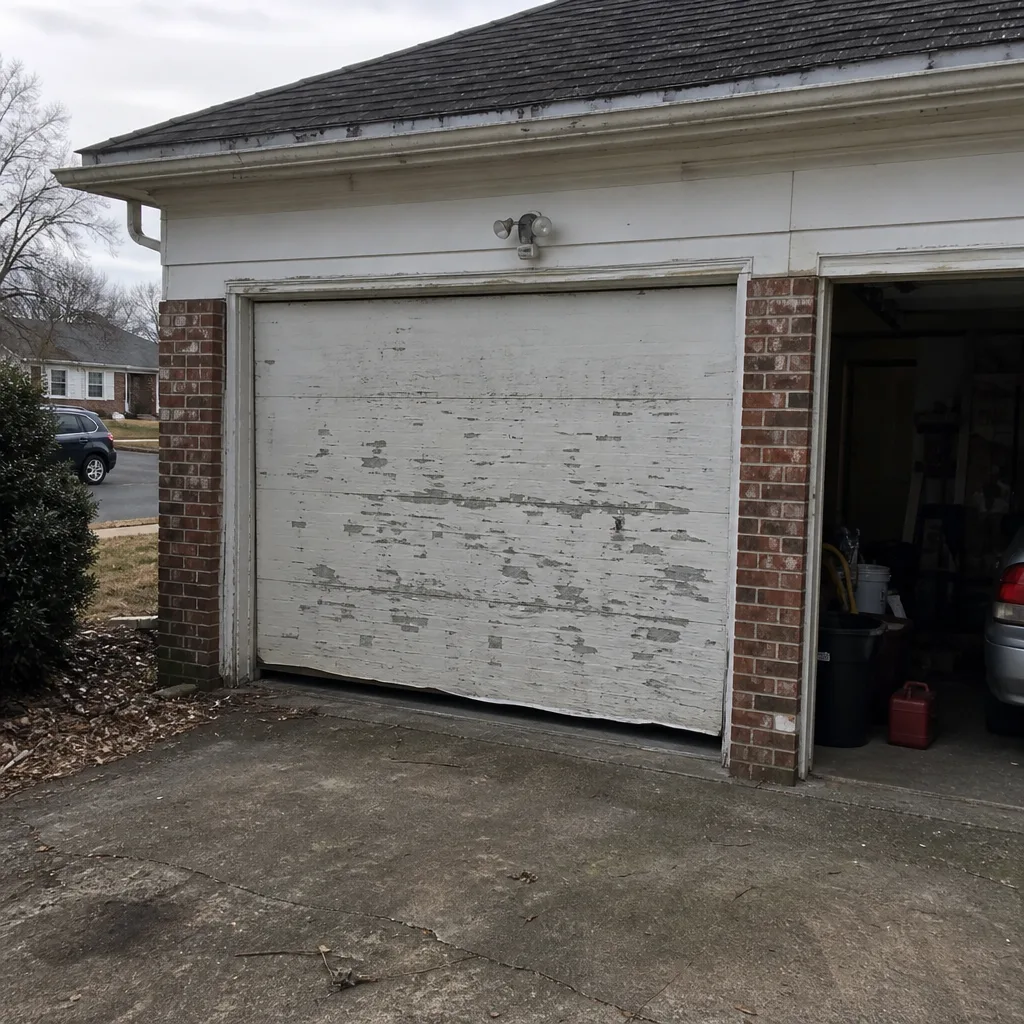
See the difference
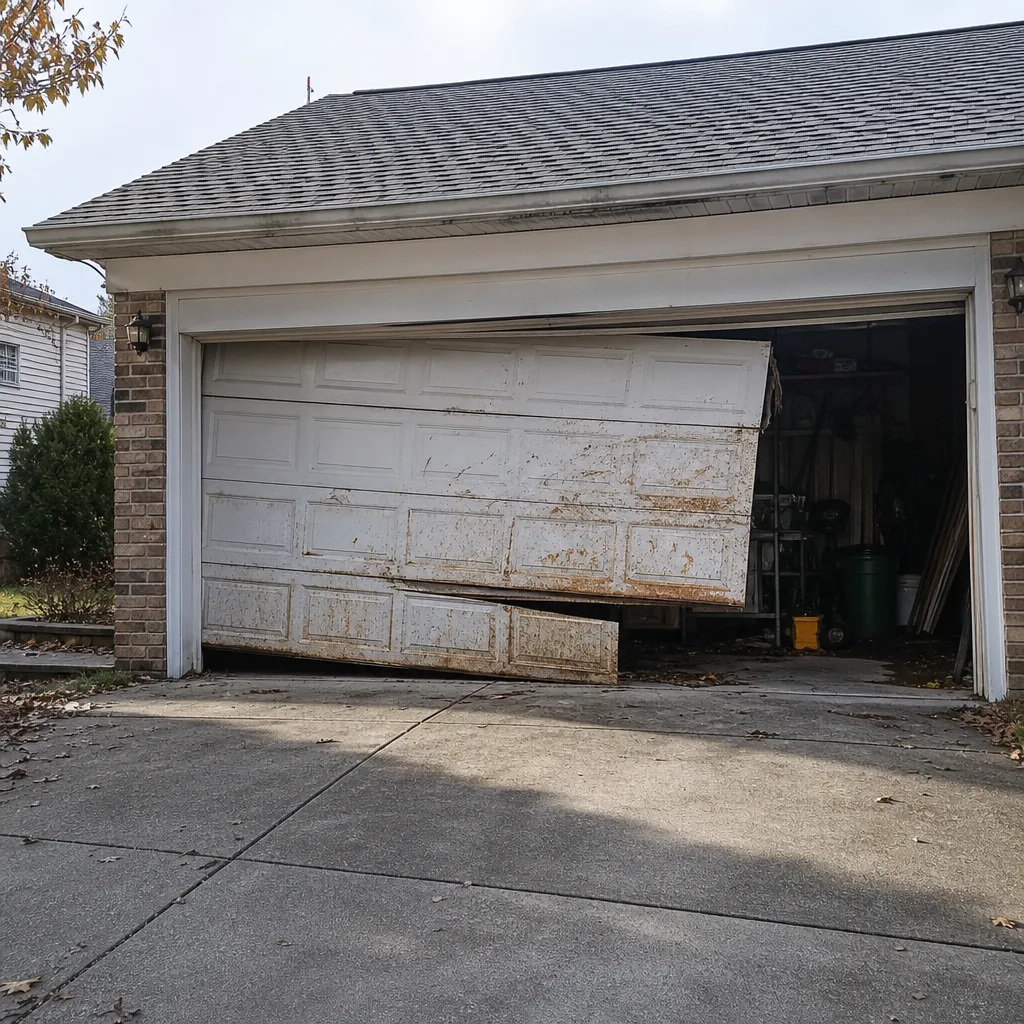 Before
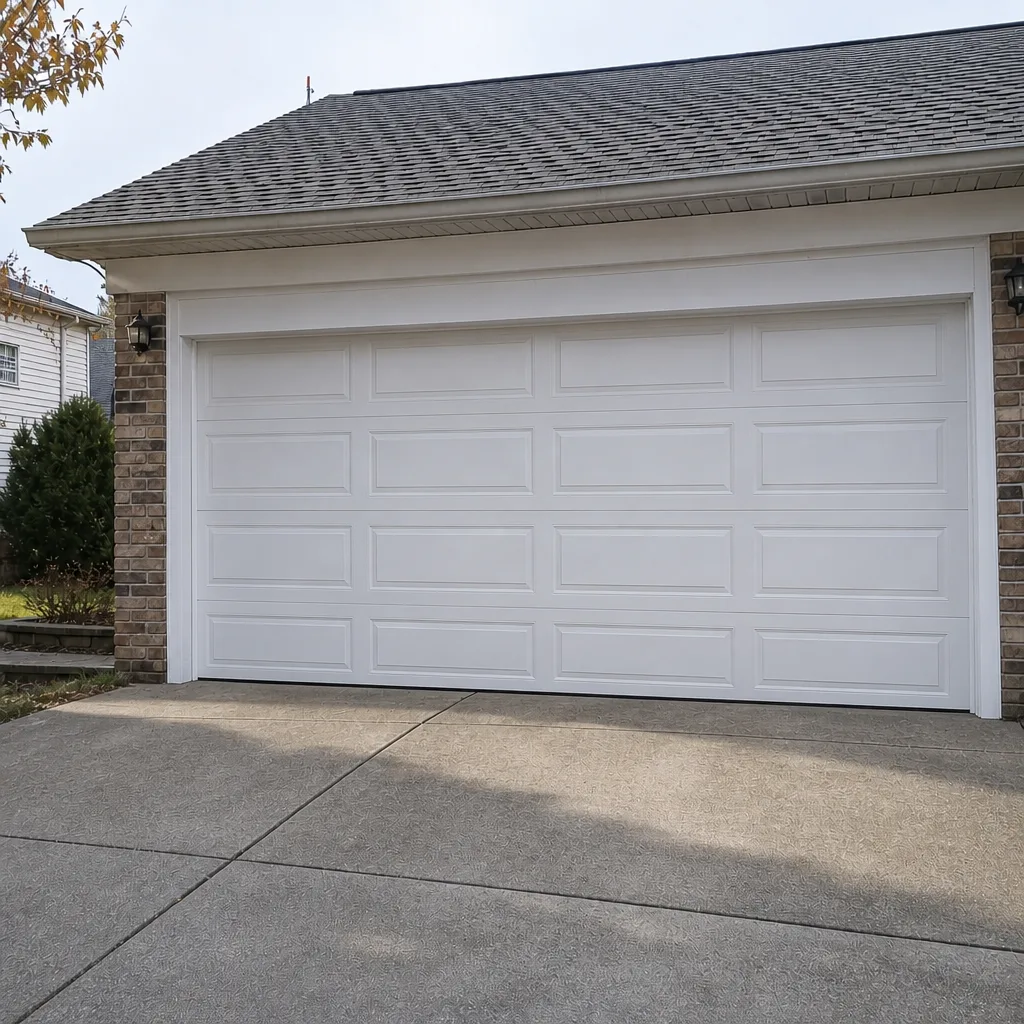 After
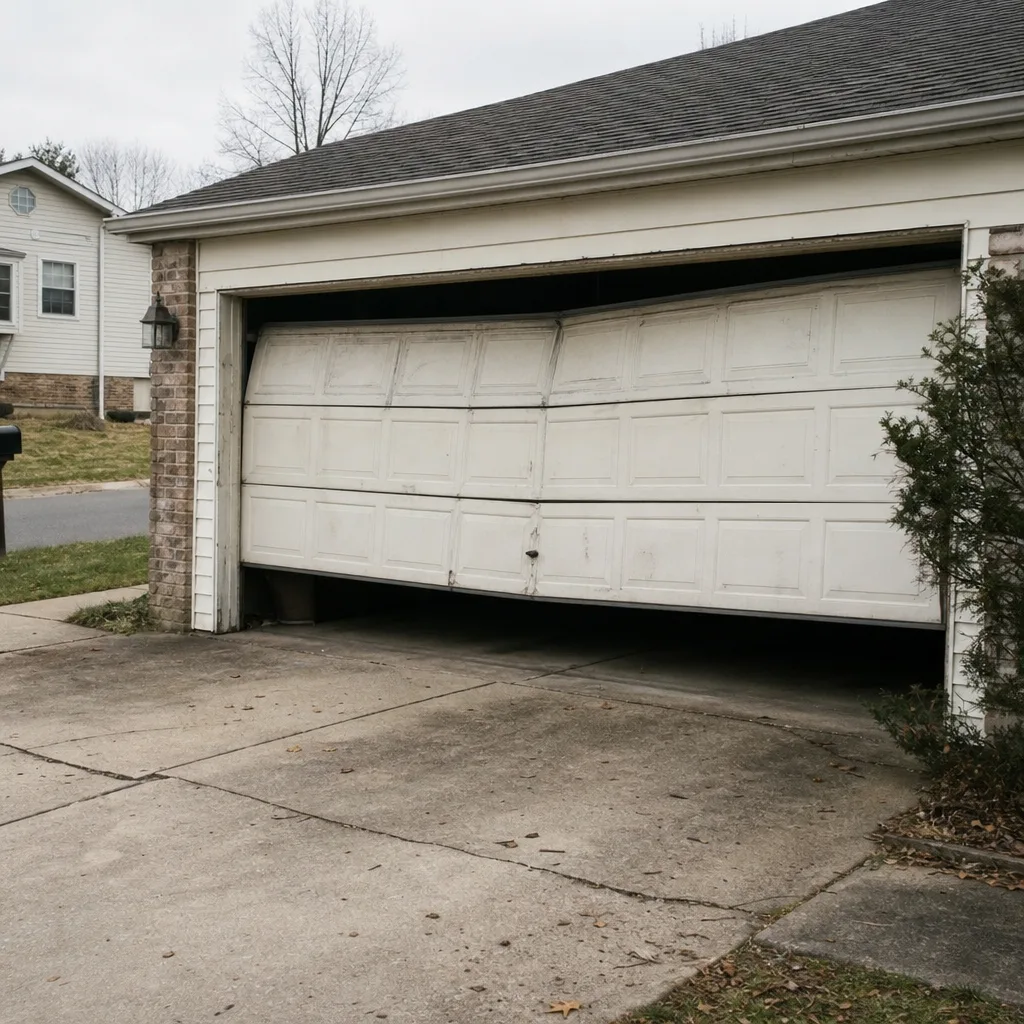 Before
 After
 Before
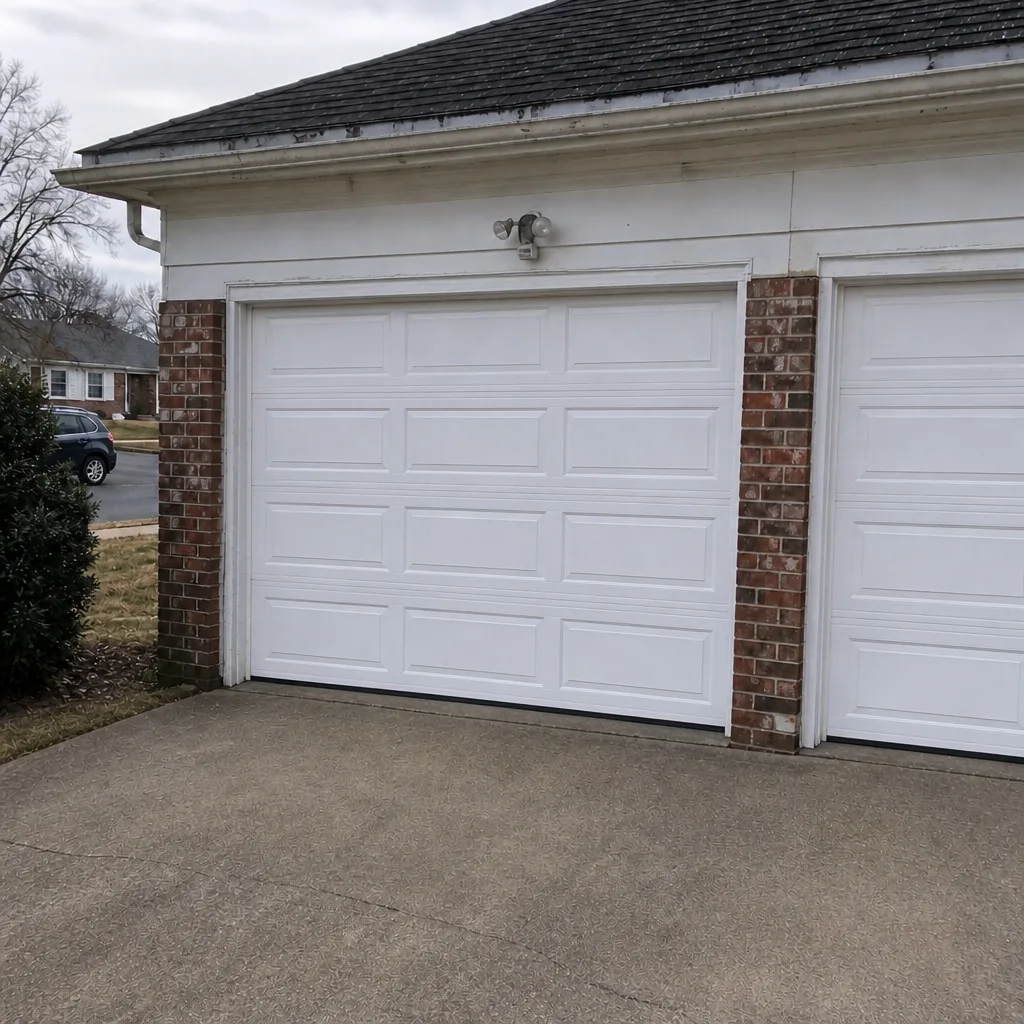 After
When to Call a Professional
Call a specialist when the problem involves springs, cables, drums or the anchor plate, when the balance test shows the door dropping or rising on its own, when the door is tilting, or when any noise or strain is getting worse instead of staying steady. Call us when you’re not sure. Garage Door Repair Bensalem handles the five areas this whole checklist touches: garage door repair, opener repair, spring repair, installation, and emergency service. Our technicians have up to 8 years of experience on the exact systems in your garage – LiftMaster, Chamberlain, Genie, Clopay, Amarr, Wayne Dalton, Craftsman and Raynor – so the work is done to the manufacturer’s spec, not a general guess. We answer 24/7, with fast dispatch from 7am to 7pm, Sunday through Friday. Estimates are free, the price is quoted and agreed before any work starts, and you’ll know the number before we touch the door. Call (844) 651-1493 for a free estimate.
Frequently Asked Questions
Once a year is enough for most doors in Bensalem, timed to late fall before the cold sets in. Hinges, rollers and the opener rail are the parts that need attention, and the right products are silicone spray for rollers and rail, white lithium grease for hinges and bearings. If your door runs on a busy schedule, or you hear noise six months after lubricating, a mid-year application of silicone on the rollers is fine – just don’t lubricate the springs.
A door that drops slowly is a warning – the spring has lost tension and the door is no longer balanced. A door that drops quickly or slams is more serious, and the door should not be used until a specialist inspects it. Test the balance once by disconnecting the opener and lifting the door to waist height. Don’t repeat the test if it’s dropping. Call (844) 651-1493 for a free estimate, and we’ll tell you whether the spring needs adjusting or replacing.
No. Garage door springs carry stored energy, and adjusting them requires specialized winding bars and the training to use them safely. People are seriously injured every year attempting this. Your role is to inspect the spring for visible damage – gaps, rust, or separation – and call a specialist if you see anything. That applies whether your door uses a torsion spring (mounted above) or extension springs (mounted on the sides).
Some noise after winter is normal in Bensalem, but the type of noise tells you a lot. A light squeak is usually dry hinges – a bit of lithium grease fixes it. A grinding or scraping sound is different: that points to a worn roller or bearing. Rattling means loose hardware. If the noise changes as the door moves, or gets louder over several weeks, that’s your cue to have the door checked. Call (844) 651-1493 for a free estimate.
Test it every three months. The obstruction sensor test is the easiest: wave an object through the invisible beam near the floor while the door is closing, and the door should reverse immediately. The mechanical test is to lay a flat 2×4 on the ground under the closing door – the door should reverse on contact. If either test fails, the opener needs adjustment before the door is used again. Don’t test the reverse with your body under the door.
No – nothing can prevent every failure. What maintenance does is catch the failure sequence early, so a worn roller doesn’t turn into a bent track and a weakening spring doesn’t turn into a snapped one. It also gives you a clear picture of what’s coming, so you can plan the replacement of a worn part instead of being surprised by an emergency repair. When something does need fixing, garage door spring repair and the rest of our work is done to the same standard as the maintenance we recommend.
The Bottom Line
The garage door failures that cause the most trouble aren’t random. They start with a stiff roller, a loose hinge, or a slow-dropping balance test – all of which you can catch months before a spring breaks. Follow the sequence: monthly for noise and visual checks, quarterly for balance and safety reverse, annually for springs, cables and hardware, and start your biggest round before the first freeze in Bensalem. Lubricate the right parts with the right products, test safely, and know your red lines. When something on this checklist crosses from “monitor” to “stop,” that’s not a failure of the checklist – that’s the checklist working exactly as intended.
If your door is showing signs on this list that you’d rather not test alone, we can look at it with you. Garage Door Repair Bensalem offers free estimates in Bensalem – call (844) 651-1493. We answer 24/7, with fast dispatch from 7am to 7pm, Sunday through Friday.
Written by the team at Garage Door Repair Bensalem.